AI Website Builder vs Templates vs Custom Development: Which Is Right for Your Business?
Compare AI website builders, website templates and custom development across speed, cost, control, quality and ongoing management before choosing your approach.
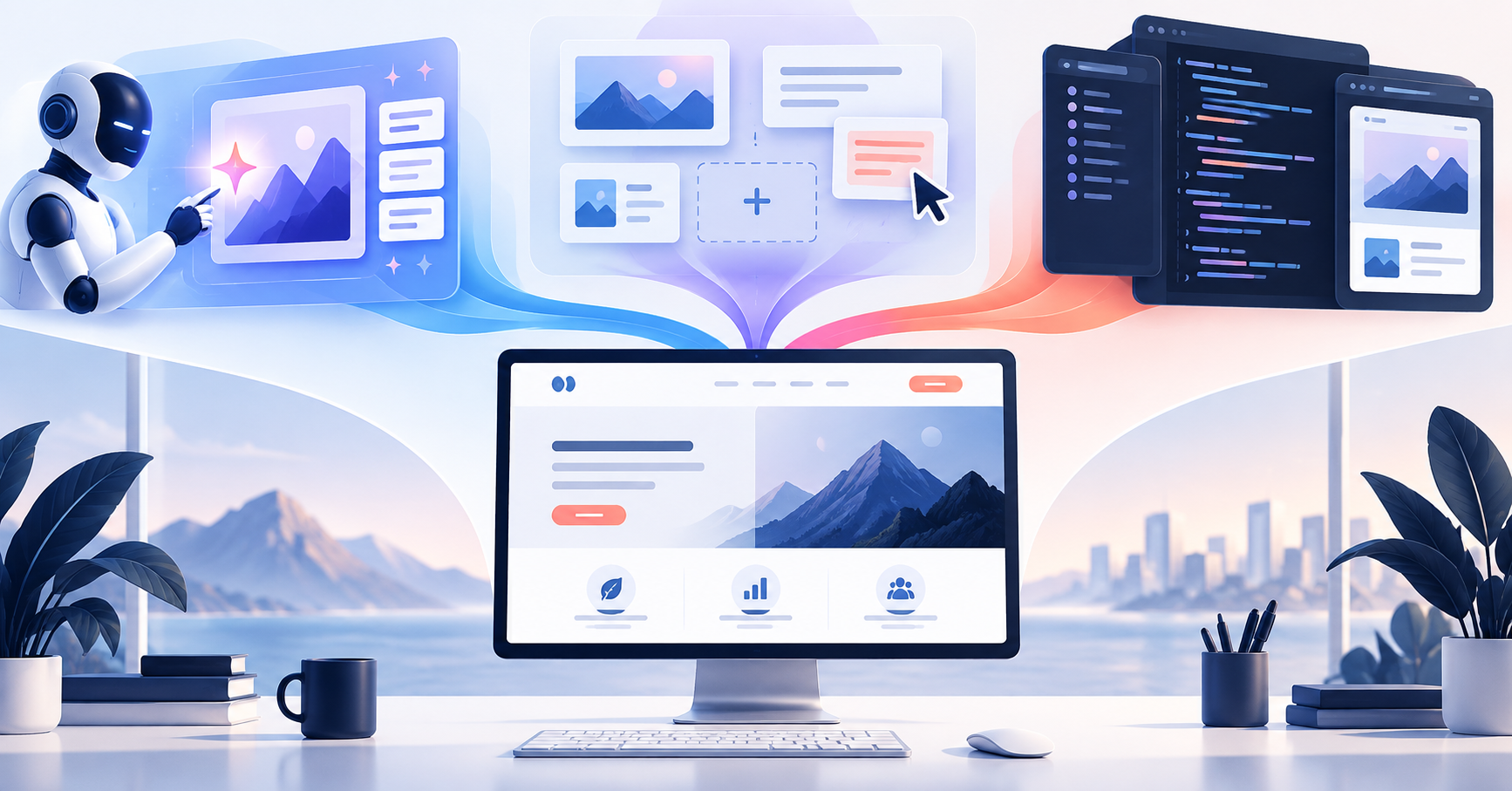
Choosing between an AI website builder, a template and custom development is not really a technology decision. It is a business decision about speed, budget, differentiation, control and the work required after launch. The best option is the one that fits the website’s real job.
The short answer
- Choose a template when the requirement is conventional, time is limited and a proven structure is an advantage.
- Choose AI-assisted creation when you can describe the result clearly and want a more tailored first draft with rapid iteration.
- Choose custom development when the project needs unique workflows, complex integrations or product-level interaction that a normal business website cannot provide.
Template websites: predictable and efficient
A good template provides a tested page hierarchy, responsive behaviour and repeatable content areas. It can be the most efficient route for local services, consultants, clinics, manufacturers and organisations with familiar requirements.
The limitation appears when every business is forced into the same content pattern or when design changes require fighting the theme. Select a template for structure, not because a demo photograph looks attractive. Review the Creator template library with your real content and customer action in mind.
AI website builders: speed with direction
An AI website builder can turn a brief into page structure, copy direction and visual presentation quickly. It works best when the input contains the business name, audience, services, proof, desired pages, visual tone and important actions. A vague prompt usually produces a generic result.
Creator’s Prompt to Live workflow separates planning, generation and approval. The current approved version can remain unchanged while a candidate is reviewed. If visual structure matters, Improve by Reference provides another starting point without copying another company’s brand or content.
Custom development: maximum control, higher responsibility
Custom development is justified for customer portals, unusual quoting tools, proprietary workflows, complex product catalogues or integrations that create real operational value. It offers the greatest freedom but requires discovery, design, engineering, testing, security, deployment and long-term maintenance.
Do not pay custom-development prices merely to reproduce a standard five-page business website. Equally, do not force a software product into a page builder when its interaction model is the core value.
Compare the factors that affect quality
Speed and initial cost
Templates are normally fastest and most predictable. AI-assisted creation can be nearly as fast while allowing more variation. Custom projects require more time and coordination, so cost should reflect genuine complexity rather than a prestige label.
Brand differentiation
AI and custom work can create a stronger individual direction, but only when supplied with useful brand and business context. Templates can still look distinctive through disciplined typography, photography, colour and content.
SEO and performance
Any approach can perform well or badly. Inspect semantic headings, page speed, mobile behaviour, metadata, internal links, structured content and the ability to add useful pages. Read the 10-step professional business website guide for a practical launch checklist.
Ownership and ongoing management
Ask who can edit the website, who controls the domain, how backups work and what happens when a team member or agency changes. A launch that creates permanent dependency can become expensive even if the initial price is low.
A hybrid approach is often strongest
Many businesses benefit from a reliable platform plus AI-assisted planning and targeted customisation. The platform supplies publishing, domains, enquiries, permissions and routine editing; AI accelerates the first draft; human review protects accuracy, usability and brand quality.
This is the model behind Creator by EnquiryGate: choose an appropriate starting path, review the result, approve changes and keep the website manageable after it goes live.
Decision checklist
Choose only after answering: What must the visitor do? Which features are truly unique? Who will provide and approve content? When must the website launch? Who will maintain it? What budget is available for the first year—not only the first draft?