Why Every Small Business Needs Its Own Website in 2026
Discover why having a professional website is essential for small businesses in 2026. Learn how a business website helps build trust, attract customers, improve Google visibility, showcase services and generate enquiries without depending entirely on social media.
Why Every Small Business Needs Its Own Website in 2026
Running a small business in 2026 is more competitive than ever. Customers are using Google, social media and AI-powered search platforms to discover businesses, compare services and make purchasing decisions.
Whether you operate a retail shop, consultancy, restaurant, startup, service agency or local business, your online presence plays an important role in attracting customers.
Many small business owners believe that having a Facebook or Instagram page is enough to promote their business. However, social media alone cannot provide the same level of control, branding and flexibility as owning a professional business website.
Your website is your digital business address, available to potential customers whenever they want to learn about your company.
Let's understand why every small business should have its own website in 2026.
1. Build Trust and Business Credibility
First impressions matter.
When potential customers search for your business online, they expect to find professional and reliable information.
A business website helps you present:
Your company profile.
Products and services.
Business experience.
Customer testimonials.
Portfolio and projects.
Contact information.
Business achievements.
A well-designed website gives customers another way to understand your business before making a purchase decision.
2. Get Found on Google
Imagine someone searching for "best digital marketing agency near me" or "affordable website development services."
If your business has relevant, optimized website pages, you have an opportunity to appear in search results.
Search Engine Optimization (SEO) helps improve your website's visibility for relevant search queries.
Important SEO activities include:
Keyword research.
SEO-friendly website content.
Optimized page titles and descriptions.
Technical SEO.
Mobile optimization.
Local SEO.
Quality backlinks.
Regular blog publishing.
A website creates a foundation for long-term organic search visibility.
3. Your Business Website Works 24/7
Unlike a physical office or shop, your website can provide business information around the clock.
Customers can visit your website at any time to:
Explore your services.
Check your product information.
Read company details.
View previous projects.
Submit enquiries.
Find your contact information.
Your website becomes an always-accessible information and enquiry channel.
4. Don't Depend Only on Social Media
Facebook, Instagram and LinkedIn are useful platforms for business promotion.
However, social media platforms control their own features, algorithms and visibility systems.
Your own website gives you greater control over your business content, design, pages and customer experience.
Social Media | Business Website |
|---|---|
Platform-dependent presence | Your own digital destination |
Limited layout flexibility | Greater design flexibility |
Platform-controlled reach | Opportunities for organic search traffic |
Social engagement | Detailed business information |
Platform-specific features | Custom website functionality |
Best strategy: Use social media to attract attention and your website to provide detailed information and generate enquiries.
5. Generate More Business Enquiries
A business website can become an important lead-generation channel.
Instead of simply displaying your services, create clear opportunities for visitors to contact your business.
For example, include:
Enquiry forms.
WhatsApp contact options.
Click-to-call buttons.
Request-a-quote forms.
Appointment booking options.
Product and service enquiry buttons.
Make the customer journey simple and easy to understand.
6. Showcase Your Products and Services
A website allows you to explain your offerings in greater detail.
For example:
Restaurants: Display menus, food images, location and ordering information.
Real Estate Businesses: Showcase properties, project details and enquiry options.
Consultants: Explain professional services, experience and consultation options.
E-commerce Businesses: Display products, prices and online shopping facilities.
Digital Marketing Agencies: Showcase SEO, social media marketing, advertising and website development services.
A dedicated service or product page can help potential customers understand exactly what you offer.
7. Reach More Customers Beyond Your Local Area
A physical business may primarily serve customers within a particular location.
However, a website gives your business an opportunity to reach people beyond your immediate geographical area.
With a proper digital strategy, you can target customers in:
Different cities.
Different states.
Multiple regions.
International markets.
Your website can help expand your business reach without requiring a physical office in every location.
8. Improve Your Business Visibility with SEO and GEO
Search behaviour is changing.
Customers are not only using traditional search engines but are also exploring AI-powered platforms to discover products, services and businesses.
This makes it important to think about both SEO and GEO.
SEO – Search Engine Optimization
SEO helps your website improve its visibility in traditional search engine results.
GEO – Generative Engine Optimization
GEO focuses on making your business information and website content clear, relevant and structured so that AI-powered systems can better understand and potentially reference it.
To strengthen your digital visibility:
Publish helpful industry-related blogs.
Answer frequently asked customer questions.
Maintain accurate company information.
Use descriptive page headings.
Create detailed service pages.
Demonstrate real business expertise.
Keep your website updated.
SEO and GEO work best as complementary parts of a broader digital strategy.
9. Build Your Brand Identity
Your website gives you the freedom to present your business identity consistently.
You can customize:
Company logo.
Brand colours.
Website design.
Typography.
Business messaging.
Product presentation.
Company information.
A consistent brand experience helps customers recognize your business across different digital channels.
10. Save Time with Easy Website Management
Your business information changes over time.
You may introduce new services, update prices, publish offers or add new projects.
A website management system makes it easier to maintain and update your online presence without rebuilding the entire website every time.
This is particularly helpful for small businesses that want to manage their own content.
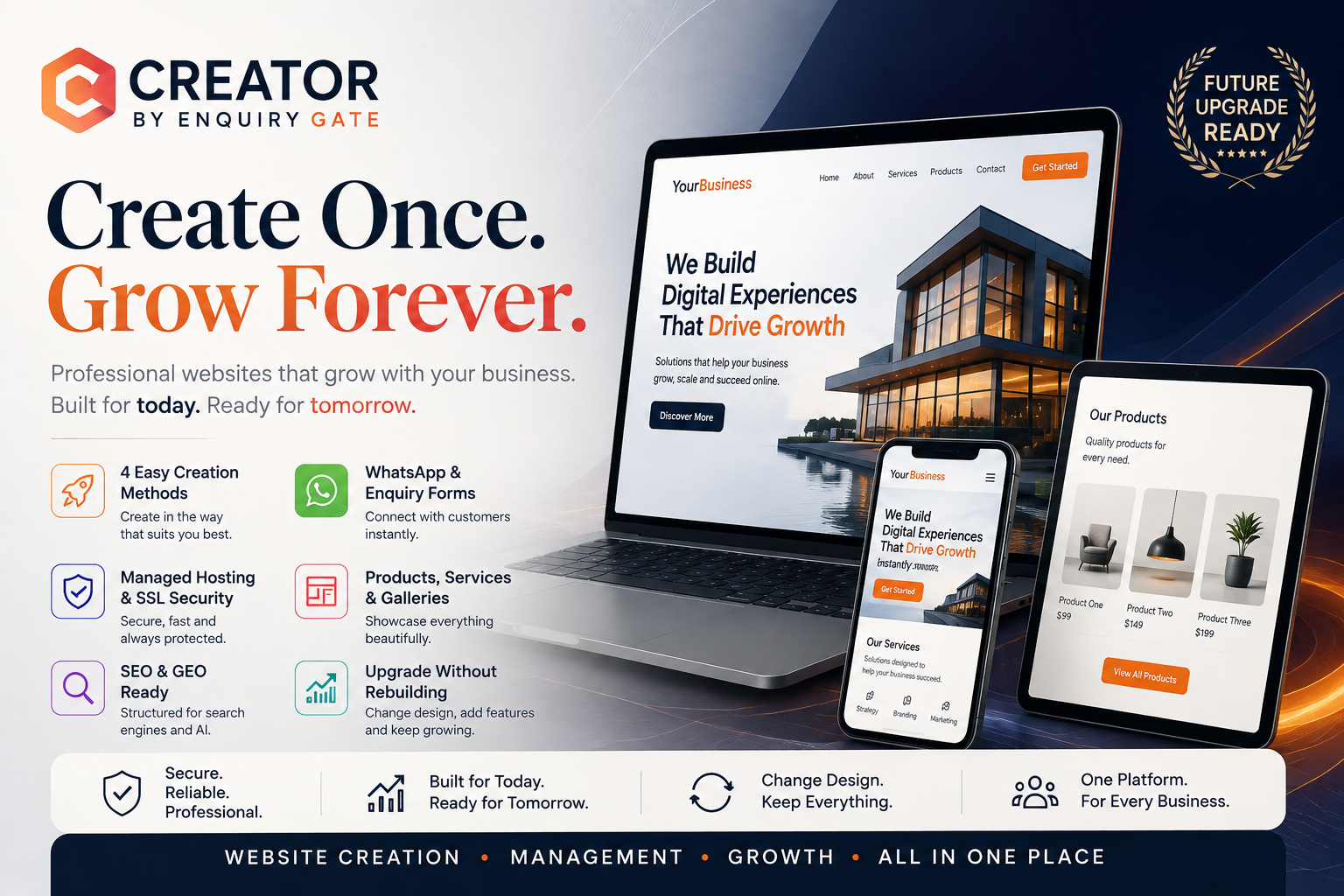
11. How Creator by EnquiryGate Helps Small Businesses
Building a website should not feel like a complicated technical project.
Creator by EnquiryGate aims to simplify website creation and management for entrepreneurs, startups, professionals and small businesses.
Creator offers two website creation approaches.
Template-Based Website Creation
Businesses can provide their business profile, brochures, content and photos or complete a simple form to get started.
Users can work with structured website templates, a dynamic editor and a full website administration system.
This approach is useful for businesses looking for a structured and manageable website.
Prompt-Based Website Creation
Users can provide written prompts or visual references describing their requirements.
This approach supports the creation of customized websites, applications and software concepts based on specific project needs.
Why Explore Creator?
Simplified website creation.
Template-based website development.
Prompt-based creation approach.
Dynamic website editing.
Website administration.
Business-focused online presence.
Explore Creator:
https://creator.enquirygate.com/
12. How to Get Started with Your First Business Website
If you are planning to launch your first business website, follow these simple steps.
Step 1: Define Your Business Goals
Decide whether your website should generate enquiries, showcase services, sell products or build brand awareness.
Step 2: Select a Domain Name
Choose a simple, professional domain name that represents your business.
Step 3: Plan Your Website Pages
Start with Home, About Us, Services, Contact Us and Blog.
Step 4: Create Professional Content
Write clear information about your business, products and services.
Step 5: Optimize for Mobile and SEO
Make sure your website works properly on smartphones and includes essential SEO elements.
Step 6: Publish and Promote
Launch your website and promote it through social media, email marketing, Google Business Profile and other relevant channels.
Step 7: Track Your Performance
Monitor visitors, enquiries, conversions and search performance to identify opportunities for improvement.
Conclusion
In 2026, a professional website is no longer just an additional marketing option for small businesses. It is an important part of building a credible and accessible digital presence.
Social media can help people discover your business, but your website gives you a dedicated place to explain your services, showcase your work and connect with potential customers.
Whether you are starting a new business or expanding an existing one, investing in a professional website is a valuable step towards long-term digital growth.
Don't just promote your business online. Build your own digital identity.
Create your business website with Creator by EnquiryGate.
Your Business. Your Website. Your Digital Future.